Enrollment Opportunities Are Often Not Lost When Families Say No
What is often lost is not the lead, but the context an interested family shared before the next handoff.
Enrollment opportunities are often not lost when families say no.
They are lost when a family is already willing to talk, but the team loses the context at handoff.
One colleague remembers that a parent cares deeply about helping a child grow confident enough to speak. The next colleague may see only a name and a phone number. What was discussed, what the family is still considering, and what had been planned for the next step were not deliberately ignored. They simply did not remain in a place the whole team could see.
The next call begins again with the most basic questions. The parent may not explicitly say no, but gradually feels that this education organization did not really remember what had been shared.
After three decades in supplementary education, I have seen this many times. Enrollment teams are rarely short on effort. What is missing is a working thread that connects that effort. One person responds, another follows up, another arranges a trial class, and someone speaks with the family again at a critical moment. Each person completes their part, but the understanding earned by one person does not always reach the next.
## Enrollment Workflows Should Be Designed to Understand a Family
Enrollment should not begin only when a record arrives. It should begin with the question, “How do we want to understand this family?” A configurable enrollment questionnaire is not simply a way to collect basic information. It lets an education organization decide, at the first interaction, which signals matter: a parent’s educational hopes, the child’s current situation, and the context that should travel into the next conversation.
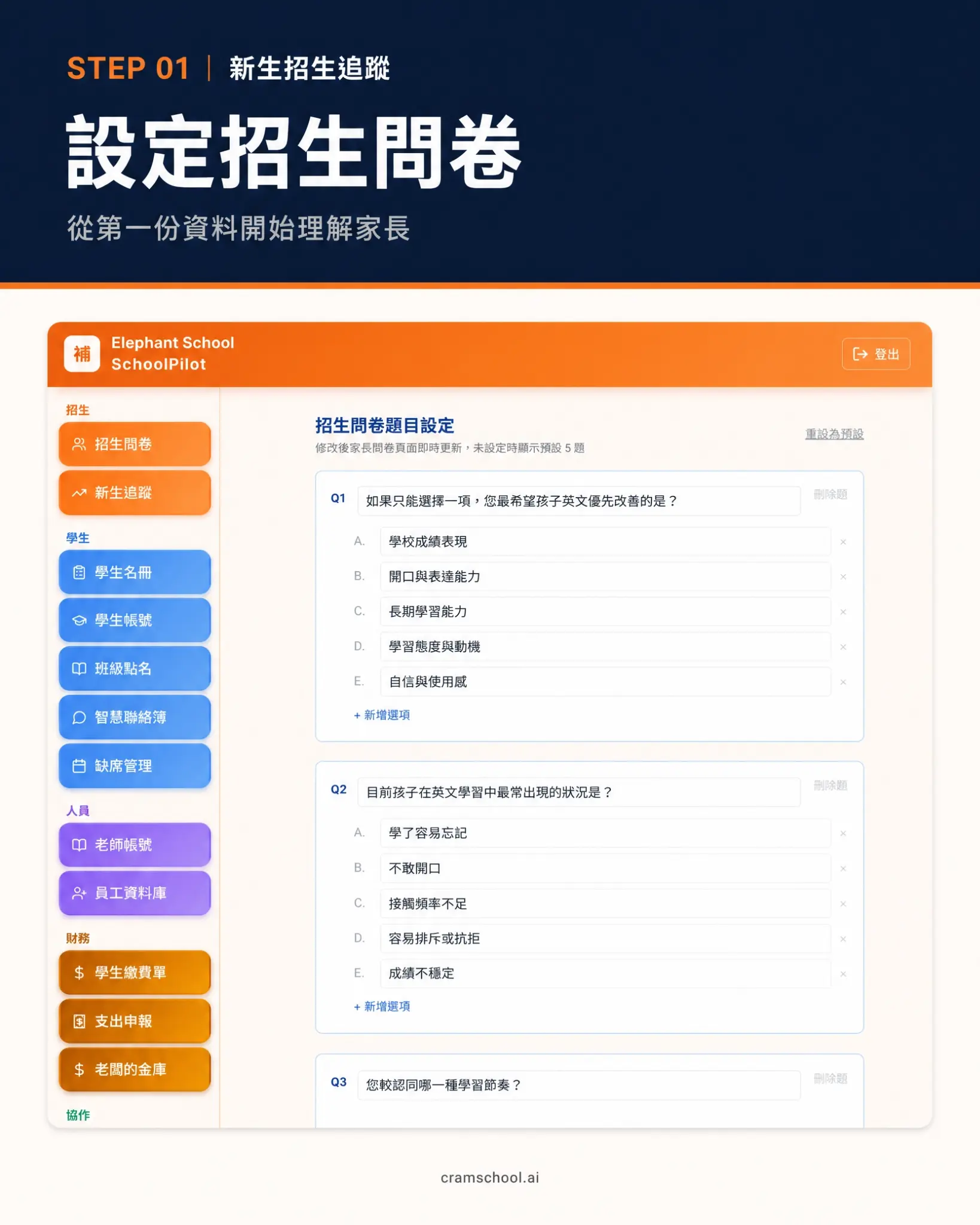
> The enrollment questionnaire is the team’s first shared point of understanding a family.
Once those signals are retained, enrollment work becomes more than a checkbox for whether someone has been contacted. The team can see where a prospective student is in the journey and who should carry the next step. Each call, trial-class arrangement, and parent reply returns to one shared record instead of disappearing into separate memories.
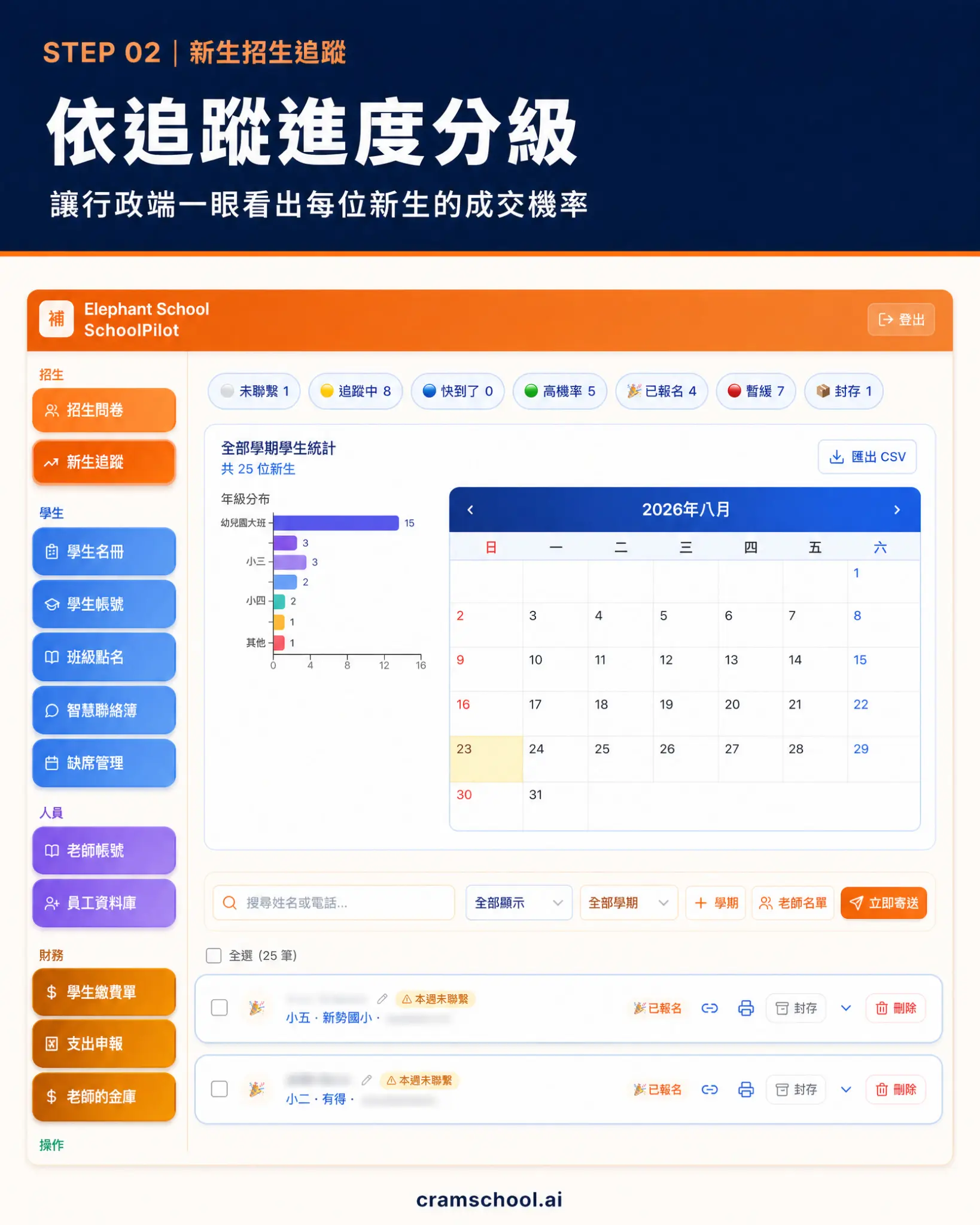
> Follow-up progress is not a label. It is a shared judgement about how the team carries the next step.
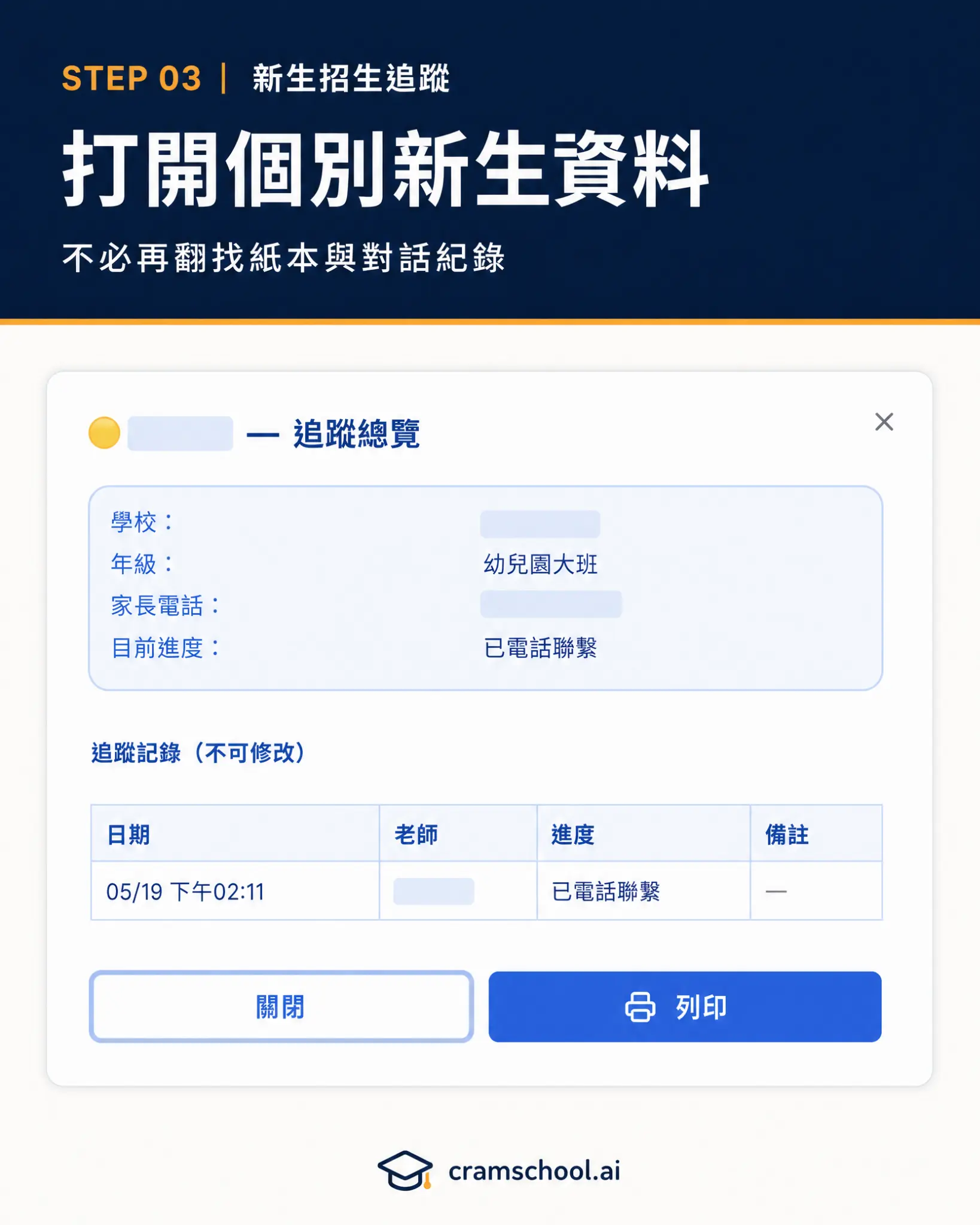
> Every prospective student deserves a context the next person can understand and carry forward.
## The Start of an AI Workflow Is Not Automation. It Is Shared Context.
AI cannot reliably reconstruct everything for a team that never retained the context. A valuable AI workflow begins by designing the path: what the first interaction preserves, who can see it, who takes responsibility next, and where every conversation returns.
Once the workflow is organized around shared context, a team can rely less on memory and spend more time on professional judgement and communication. Future AI applications then have a dependable starting point.
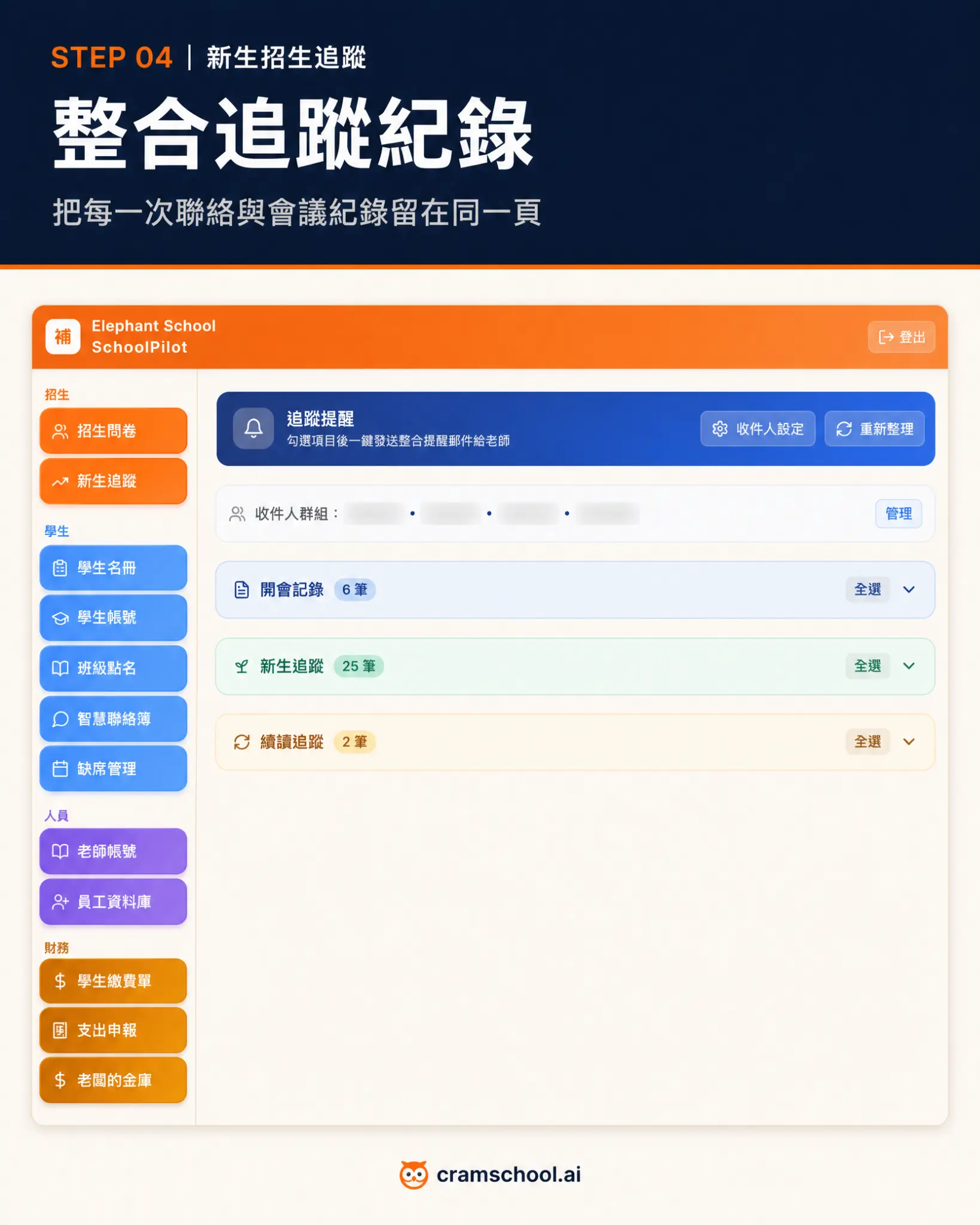
> Return every conversation to one working thread, so a handoff is never a restart.
cramschool.ai developed New Student Enrollment Tracking not to decide how people should speak with families. It was built so that every piece of understanding already earned can travel forward with the next colleague.
> **So every prospective student has a path that is thoughtfully carried forward—toward the classroom.**
They are lost when a family is already willing to talk, but the team loses the context at handoff.
One colleague remembers that a parent cares deeply about helping a child grow confident enough to speak. The next colleague may see only a name and a phone number. What was discussed, what the family is still considering, and what had been planned for the next step were not deliberately ignored. They simply did not remain in a place the whole team could see.
The next call begins again with the most basic questions. The parent may not explicitly say no, but gradually feels that this education organization did not really remember what had been shared.
After three decades in supplementary education, I have seen this many times. Enrollment teams are rarely short on effort. What is missing is a working thread that connects that effort. One person responds, another follows up, another arranges a trial class, and someone speaks with the family again at a critical moment. Each person completes their part, but the understanding earned by one person does not always reach the next.
## Enrollment Workflows Should Be Designed to Understand a Family
Enrollment should not begin only when a record arrives. It should begin with the question, “How do we want to understand this family?” A configurable enrollment questionnaire is not simply a way to collect basic information. It lets an education organization decide, at the first interaction, which signals matter: a parent’s educational hopes, the child’s current situation, and the context that should travel into the next conversation.

> The enrollment questionnaire is the team’s first shared point of understanding a family.
Once those signals are retained, enrollment work becomes more than a checkbox for whether someone has been contacted. The team can see where a prospective student is in the journey and who should carry the next step. Each call, trial-class arrangement, and parent reply returns to one shared record instead of disappearing into separate memories.

> Follow-up progress is not a label. It is a shared judgement about how the team carries the next step.

> Every prospective student deserves a context the next person can understand and carry forward.
## The Start of an AI Workflow Is Not Automation. It Is Shared Context.
AI cannot reliably reconstruct everything for a team that never retained the context. A valuable AI workflow begins by designing the path: what the first interaction preserves, who can see it, who takes responsibility next, and where every conversation returns.
Once the workflow is organized around shared context, a team can rely less on memory and spend more time on professional judgement and communication. Future AI applications then have a dependable starting point.

> Return every conversation to one working thread, so a handoff is never a restart.
cramschool.ai developed New Student Enrollment Tracking not to decide how people should speak with families. It was built so that every piece of understanding already earned can travel forward with the next colleague.
> **So every prospective student has a path that is thoughtfully carried forward—toward the classroom.**